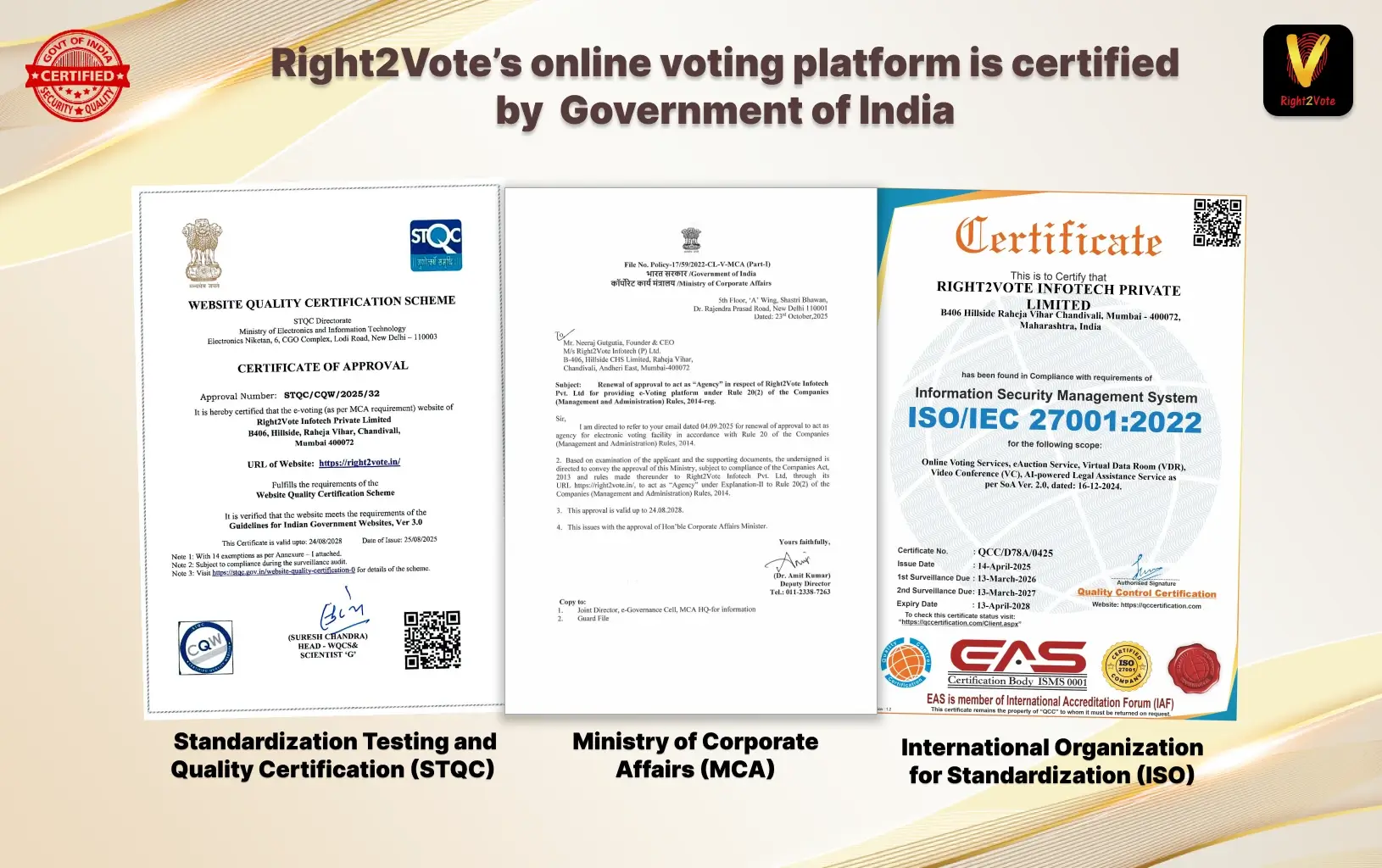
Certified by Government of India

Political Party Internal Democracy and Online Voting

Every democratic nation conducts elections to ensure that citizens have the right to choose their representatives and leaders from national parliaments to village panchayats.

Book a demo Explore Features

543

Lok Sabha constituencies

5 years

Ordinary Lok Sabha term

Millions

Voters in a single election

OVERVIEW

Political Party Internal Democracy and Online Voting

Political parties are member-based organizations that require internal systems for decision-making, leadership selection, policy development, and member participation. Internal party democracy allows eligible members to participate in organizational decisions and, where applicable, elect representatives to party committees at different levels.

Political parties may have organizational structures at national, state, district, municipal, constituency, and local levels. Conducting elections and polls across a geographically distributed membership can be challenging when participation depends entirely on physical meetings.

Right2Vote provides online voting and polling technology that can help eligible political organizations conduct internal elections, member voting, resolutions, feedback polls, and meetings digitally. Depending on the party's constitution, applicable rules, and regulatory requirements, online voting can make internal decision-making more accessible, structured, and efficient.

01

National-Level Political Party Elections

  • Political parties generally have a central or national organizational structure responsible for managing party affairs, policies, administration, and coordination across different regions. Depending on the party constitution, members or designated delegates may participate in selecting national office bearers or committee members.
  • Conducting national-level internal elections can be challenging because party members and delegates may be spread across different states and cities. Bringing everyone together for a physical election can require substantial planning, travel, security, venue arrangements, and administrative resources.
  • Online voting can provide a convenient mechanism for eligible members to participate remotely. A digital platform can help manage voter eligibility, candidates, voting periods, authentication, ballots, and results according to the party's prescribed election process.
  • Right2Vote can provide configurable eVoting technology for eligible organizational elections, helping political parties reduce logistical challenges while creating a structured digital record of the voting process.
02

State-Level Political Party Elections

  • National political parties operating across multiple states may have separate state-level organizational committees responsible for party activities and coordination within their respective states.
  • Depending on the party constitution and applicable rules, state-level office bearers or committee members may be selected through elections or other defined democratic processes.
  • Online voting can make state-level internal elections easier when members or delegates are distributed across different cities and districts. Eligible participants can vote remotely without travelling to a central location.
  • Right2Vote can help configure separate voter groups and election processes for different states, allowing the political organization to manage multiple internal elections through a structured digital platform.
03

District, Constituency and Local-Level Elections

  • Political parties may also have organizational structures at district, constituency, municipal, ward, block, or other local levels. These local committees play an important role in coordinating party activities and connecting the organization with its grassroots membership.
  • Conducting elections at multiple organizational levels can create significant administrative work, particularly when each level has its own voter list, candidates, positions, and election schedule.
  • Online voting can simplify this process by allowing eligible members to participate digitally. Voter eligibility can be defined according to the relevant organizational unit, such as a district, constituency, ward, or local committee.
  • A centralized digital voting platform can help the organization conduct multiple elections while maintaining separate voter groups and election configurations.
04

Internal Voting for Leadership and Office Bearers

  • Political organizations may need to select office bearers for different positions, such as President, Vice President, General Secretary, Secretary, Treasurer, and executive committee members.
  • Leadership elections can be sensitive because the outcome can influence the future direction of the organization. A structured voting process can help eligible members participate according to the organization's rules.
  • Online voting can provide convenient access for members who are geographically distributed. Features such as voter authentication, secret ballot, configurable candidate lists, audit trails, and automated result calculation can be used where appropriate.
  • The exact voting procedure should always follow the political party's constitution, internal rules, and applicable regulatory requirements.
05

Internal Voting on Party Resolutions

  • Political parties regularly need to take decisions on organizational policies, administrative matters, financial matters, membership issues, strategic proposals, and other resolutions.
  • Instead of relying entirely on physical meetings or email-based approvals, eligible members or delegates can participate through structured digital voting where permitted.
  • Right2Vote can help organizations create digital ballots containing resolutions and voting options. The party can define eligible voters, voting periods, and applicable voting rules before the poll begins.
  • This can create a more organized decision-making process and provide a digital record of the voting activity for the organization's internal documentation.
06

Annual General Meetings and General Body Voting

  • Political organizations may conduct annual general meetings, general body meetings, executive meetings, and special meetings to discuss organizational matters and take decisions.
  • Physical meetings can become difficult when members or delegates are located across different cities and states. Travel requirements can reduce participation and increase the cost of organizing meetings.
  • Digital voting and online meeting technology can allow eligible participants to join remotely and participate in applicable resolutions or elections.
  • Right2Vote provides eVoting and eAGM technology that can help organizations conduct eligible meetings and voting processes digitally, subject to their governing rules and applicable requirements.
07

Extraordinary and Special Resolution Voting

  • Organizations may sometimes need to take decisions on urgent or extraordinary matters outside their regular annual meetings. These decisions may require a special general meeting or a separate voting process.
  • Online voting can provide a convenient way to collect votes from eligible members within a defined voting period. Instead of requiring every member to be physically present at the same location, members can participate remotely where the organization's rules permit.
  • The platform can be configured with the relevant resolution, voting options, eligible voters, and voting timeline. Results can then be calculated electronically according to the configured voting rules.

Internal Candidate Selection and Member Feedback

Political organizations may need to collect feedback from members before making organizational decisions, selecting candidates, planning campaigns, or determining priorities.

Member polling can provide structured feedback rather than relying only on informal discussions or individual opinions. Political organizations can conduct polls among specific groups, such as district members, constituency-level members, office bearers, delegates, or other eligible participants.

Right2Vote's polling technology can help create targeted polls and collect responses digitally. Depending on the requirement, organizations can use secret ballots, restricted voter groups, audit trails, and other configurable features.

Any use of polling for candidate selection should follow the party's internal constitution and applicable election and political-party rules.

Candidate and Ticket Selection Feedback

Candidate selection is an important internal process for political organizations. Parties may want to understand the views of their members or local organizational units before finalizing candidates.

Digital polling can help collect structured feedback from eligible members or defined organizational groups. Instead of collecting opinions through scattered meetings and individual communications, the party can use a centralized poll.

The results can provide an additional source of member feedback for the party's decision-makers. However, a poll should not be presented as a formal candidate selection mechanism unless it is authorized under the party's rules.

Right2Vote can provide configurable polling technology that allows organizations to define the voter group, questions, response options, and voting period.

Manifesto and Policy Feedback

Political parties develop policies and election manifestos that communicate their priorities to citizens. Before finalizing policy positions, a party may wish to understand the views and priorities of its members or target communities.

Online polling can help collect structured feedback on issues such as education, employment, infrastructure, healthcare, agriculture, taxation, business, technology, or other policy areas.

Instead of relying exclusively on informal feedback, parties can conduct focused digital polls and analyze the responses. The objective is to understand stakeholder priorities and obtain structured feedback.

Right2Vote's polling technology can help conduct such surveys and polls among defined participant groups. The platform can be configured according to the purpose of the exercise and the organization's requirements.

Member Engagement and Internal Polling

Internal democracy is not limited to elections. Political organizations can regularly engage their members through polls, surveys, consultations, and voting on organizational matters.

For example, a party may want to understand member satisfaction, identify organizational priorities, collect suggestions, or seek opinions on internal initiatives.

Online polling can make such engagement easier because members can participate remotely without attending a physical meeting. This can potentially increase participation, particularly among members who live far from the organization's offices or meeting locations.

Right2Vote provides customizable polling technology that can be used for eligible member engagement and internal decision-making activities.

Right2Vote-Certified-eVoting-platform
Security

Secure and Transparent Internal Party Voting

Internal political organization elections and voting can involve sensitive decisions. It is therefore important to have appropriate voter authentication, ballot confidentiality, access controls, and records of the voting process.

Depending on the requirement, Right2Vote can provide features such as OTP authentication, secret ballot, audit trails, voter management, reminders, configurable voting periods, and result reporting.

Secret ballot functionality can help protect the confidentiality of a voter's choice where required. Audit trails can provide records of relevant voting activities without necessarily revealing the voter's ballot choice in a secret-ballot election.

The security and voting configuration should be selected according to the organization's election rules, applicable laws, and specific requirements.

Why Political Organizations Can Use Online Voting

Right2Vote-Certified-eVoting-platform

Political organizations may have members and delegates distributed across large geographical areas. Physical elections and meetings can therefore require significant time, travel, manpower, and infrastructure.

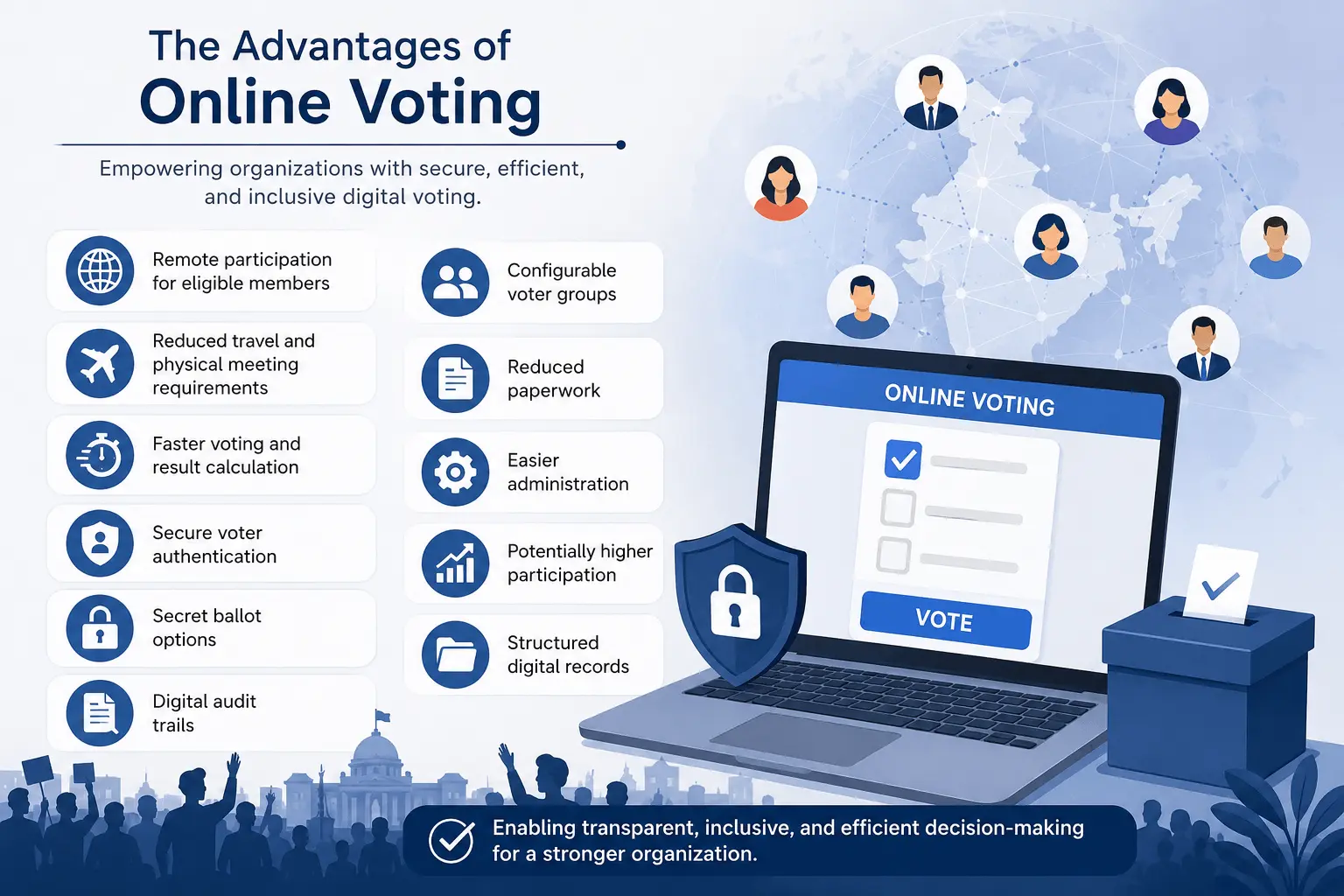
Online voting can provide several potential advantages:

Remote participation for eligible members
Reduced travel and physical meeting requirements
Faster voting and result calculation
Secure voter authentication
Secret ballot options
Digital audit trails
Configurable voter groups
Reduced paperwork
Easier administration
Potentially higher participation
Structured digital records

These benefits can make digital voting useful for eligible internal organizational elections, resolutions, consultations, and member polls.

Right2Vote for Political Party Internal Voting

Right2Vote provides online voting and polling technology that can support eligible internal organizational voting requirements. Political organizations can use configurable digital ballots for internal elections, resolutions, consultations, and member polls, subject to their constitutions and applicable rules.

The platform can help manage eligible voters, election positions, candidates, resolutions, voting periods, authentication, and results. Depending on the voting requirement, features such as secret ballot, audit trails, reminders, and other authentication options can also be configured.

Right2Vote can also support online meetings through its eAGM and video conferencing technology, allowing organizations to combine remote participation with structured digital voting where permitted.

Online voting should complement, rather than replace, the political party's constitution, internal election procedures, and applicable Election Commission or other regulatory requirements.

Ready to Go Digital?

Join thousands of organizations that trust Right2Vote to conduct their elections securely and transparently.

FAQS

Frequently Asked Questions

What is internal democracy in a political party?

Internal democracy refers to the participation of eligible members in a political party's organizational decision-making. It can include internal elections, selection of office bearers, voting on resolutions, member consultations, and other democratic processes defined by the party's constitution and applicable requirements.

Can political parties conduct internal elections online?

Where permitted by the party's constitution, applicable rules, and regulatory requirements, internal elections can be conducted using online voting technology. A digital platform can help manage eligible voters, candidates, voting periods, authentication, and results.

What types of political party elections can be conducted online?

Eligible internal elections may include national, state, district, constituency, municipal, local committee, office bearer, executive committee, and other organizational elections, depending on the party's rules and applicable requirements.

Can political parties conduct online voting on internal resolutions?

Yes. Where permitted, political organizations can use digital voting to collect member or delegate votes on resolutions, proposals, policies, organizational matters, and other decisions.

Can political party members vote remotely?

Yes. Online voting can allow eligible members or delegates to participate remotely using a mobile phone, tablet, or computer, subject to the organization's voting rules and authentication requirements.

Can internal political party elections use secret ballots?

Yes. Secret ballot functionality can be configured where confidentiality of individual voting choices is required and permitted by the applicable election rules.

Can political parties conduct online polls among members?

Yes. Online polling can be used to collect structured feedback from members, delegates, office bearers, or specific organizational groups on eligible internal matters.

Can political parties use online polling for candidate selection?

Online polling can be used to collect member feedback on potential candidates where permitted by the party's internal rules. However, a poll should only be treated as a formal candidate-selection mechanism if the party's constitution and applicable rules authorize it.

Can political parties conduct online AGMs and general body voting?

Where permitted by applicable rules, political organizations can use online meeting and voting technology to facilitate remote participation in eligible AGMs, general body meetings, and special meetings.

How can Right2Vote help political parties with internal democracy?

Right2Vote provides online voting and polling technology that can help eligible political organizations conduct internal elections, resolution voting, member polls, and other voting processes. Features can include voter authentication, secret ballot, audit trails, configurable voter groups, reminders, and digital result reporting, depending on the requirements.


AJAX Loader
Contact us