Certified by Government of India

Government Elections and Online Voting Technology

Secure internet and mobile voting technology, conceived in 2014, exploring how digital elections can complement traditional systems and make voting more accessible, convenient and efficient.

Book a demo Explore Features

543

Lok Sabha constituencies

5 years

Ordinary Lok Sabha term

Millions

Voters in a single election

OVERVIEW

Government Elections and Online Voting Technology

Government elections are a fundamental part of democracy because they allow citizens and eligible representatives to participate in choosing their leaders and decision-makers. Right2Vote's online election platform was conceived in 2014 with the vision of exploring how secure internet and mobile voting technology could complement traditional election systems and make voting more accessible, convenient, and efficient.

India conducts elections at multiple levels, from national and state elections to municipal and panchayat elections. In addition to direct elections, India also has several indirect elections in which elected representatives or other eligible groups participate. As election processes involve very large populations, extensive logistics, election personnel, polling stations, transportation, security, and vote counting, digital voting technology has the potential to transform how eligible voters participate in elections, subject to legal and regulatory approval.

01

Lok Sabha Elections in India

  • The Lok Sabha election is India's national parliamentary election. Citizens vote in parliamentary constituencies to elect Members of Parliament (MPs), who form the Lok Sabha.
  • The scale of the Indian general election is enormous. Hundreds of millions of eligible voters participate across the country, requiring a large network of polling stations, election personnel, security arrangements, transportation, election materials, and counting infrastructure.
  • The size and geographical diversity of India also create challenges for voters who may be living away from their registered constituency. Migrant workers, students, professionals, armed forces personnel, NRIs, senior citizens, and people with mobility challenges can face different logistical barriers to participation depending on their circumstances and applicable voting arrangements.
  • This is one reason why secure and legally approved remote voting technologies continue to attract interest around the world.
02

State Assembly Elections

  • State Assembly or Vidhan Sabha elections allow eligible voters in a state to elect their representatives to the state legislative assembly.
  • Each state has its own electoral geography, population distribution, political environment, and administrative requirements. Conducting elections across a large state can require substantial coordination among election authorities, polling personnel, security agencies, and local administration.
  • Online voting technology could potentially provide an additional channel for eligible voters to participate remotely if approved and implemented by the appropriate authorities.
  • A secure digital voting system would need to address voter authentication, ballot secrecy, election integrity, accessibility, auditability, cybersecurity, and legal compliance before it could be used for government elections.
03

Municipal and Panchayat Elections

  • Local government elections are equally important because they directly affect governance at the city, town, and village level.
  • These elections can include:
    • Municipal Corporation elections
    • Municipal Council elections
    • Nagar Panchayat elections
    • Zilla Parishad elections
    • Panchayat Samiti elections
    • Gram Panchayat elections
  • Local elections are generally administered under the relevant State Election Commission and applicable state laws.
  • Because local elections are conducted across numerous constituencies and administrative units, technology can potentially help improve voter communication, election administration, accessibility, and participation.
  • Right2Vote's online voting technology can be configured for different election structures, making it suitable for exploring digital voting solutions for organizations and institutions that require secure and structured elections.
04

Presidential and Vice Presidential Elections

  • The President and Vice President of India are not elected through direct voting by all citizens.
  • Instead, the Constitution provides an electoral college-based process involving eligible elected representatives. The voting system also involves specific constitutional and statutory rules.
  • Such elections demonstrate that government voting is not limited to simple one-person-one-vote elections. Some elections require weighted voting, preferential voting, or other specialized election mechanisms.
  • Digital voting platforms designed for complex elections therefore need to support configurable voting rules rather than only conventional single-choice ballots.
05

Rajya Sabha and Legislative Council Elections

  • Rajya Sabha elections are another important category of government elections. Members of the Rajya Sabha are elected through an indirect electoral process involving elected members of State Legislative Assemblies, according to the applicable constitutional and statutory framework.
  • Similarly, states that have Legislative Councils conduct elections for different categories of members, including representatives of local authorities, graduates, teachers, and other prescribed constituencies.
  • These elections can involve preferential voting and the Single Transferable Vote system.
  • A modern digital voting platform needs to be capable of supporting complex voting methodologies where applicable, including configurable preferences, weighted voting, and other election rules.
Government Undertaking Elections Conducted Using Right2Vote

Right2Vote’s platform has been successfully utilized for elections in several government undertakings.

  • Indian Oil Corporation Retired Officers Welfare Society, Delhi, Delhi  Retired Officers Welfare Society Right2Vote Clients
  • All India Mes Civilian Draughtsman Association, Pune, Maharashtra ntpc - right2vote
  • NTPC's Executives Association of Ramagundam, Peddapally, Telangana ntpc - right2vote
  • NTPC Apex Association, Shaktinagar, Uttar Pradesh ntpc - right2vote
  • NPTC Executives Federation of India, Kolkata, West Bengal ntpc - right2vote
  • U.P Power Corporation C.P.F Trust, Lucknow, Uttar Pradesh ntpc - right2vote
  • U.P State Power Sector Employees Trust, Lucknow, Uttar Pradesh ntpc - right2vote
  • U.P Rajya Vidyut Utpadan Nigam Ltd CPF Trust, Lucknow, Uttar Pradesh ntpc - right2vote
  • NTPC Executive Federation of India, Kolkata, West Bengal ntpc - right2vote
  • Centre for Development of Stones, Jaipur, Rajasthan ntpc - right2vote
  • Kendriya Vihar Resident Welfare Association, Khurda, Odisha ntpc - right2vote

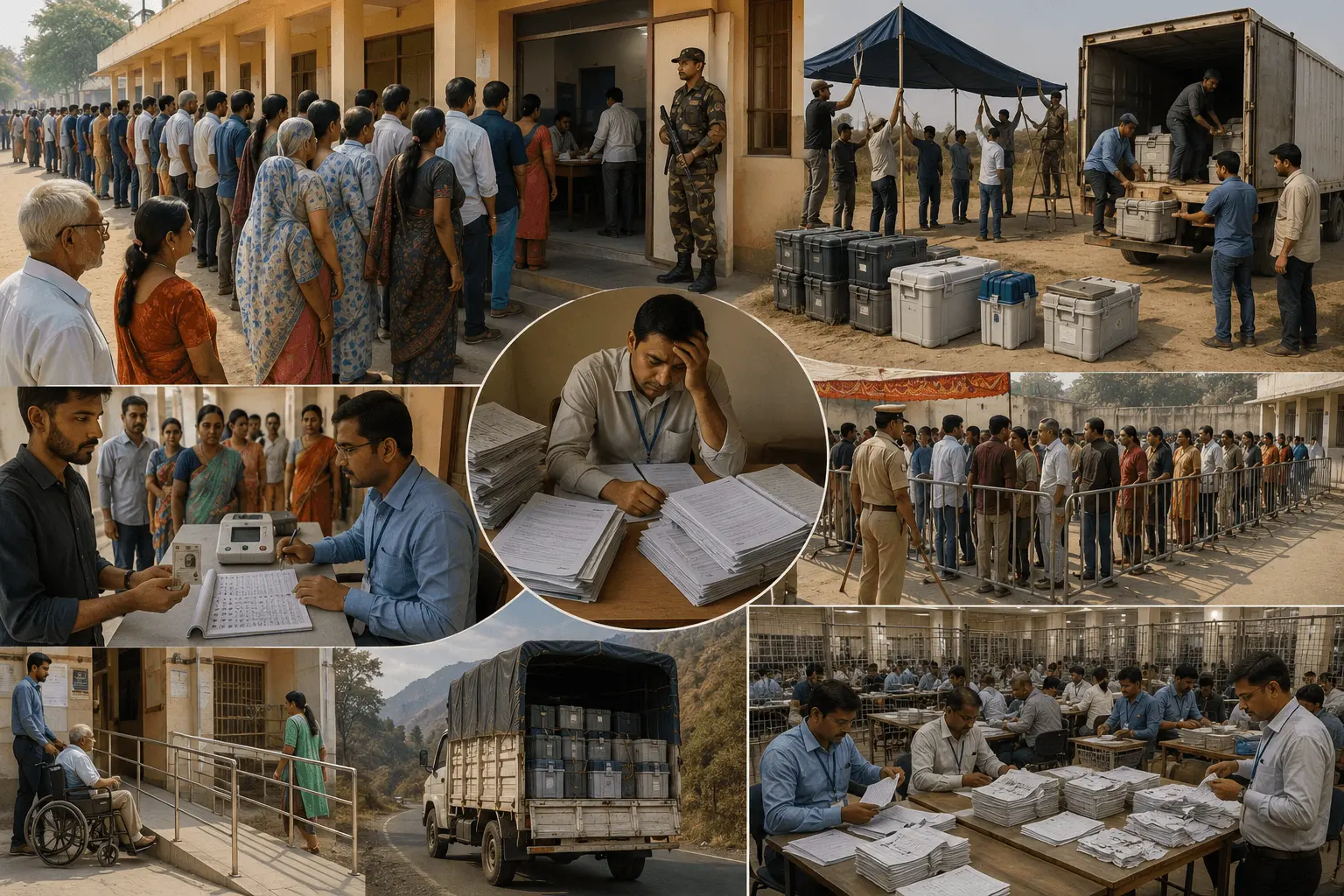
Challenges in Traditional Government Elections

For voters, physical voting can also involve travelling to a polling station and voting within specified hours.

Remote voting technology could potentially address some of these challenges, but government elections require a much higher standard of security, legal compliance, accessibility, transparency, auditability, and public trust than ordinary organizational elections.

Large-scale elections involve significant logistical challenges. These may include:

Setting up and managing polling locations
Deploying election personnel
Transporting election equipment and materials
Voter verification
Security arrangements
Managing queues
Supporting voters with accessibility requirements
Transporting voting equipment
Vote counting
Result tabulation
Maintaining election records
Right2Vote-Certified-eVoting-platform

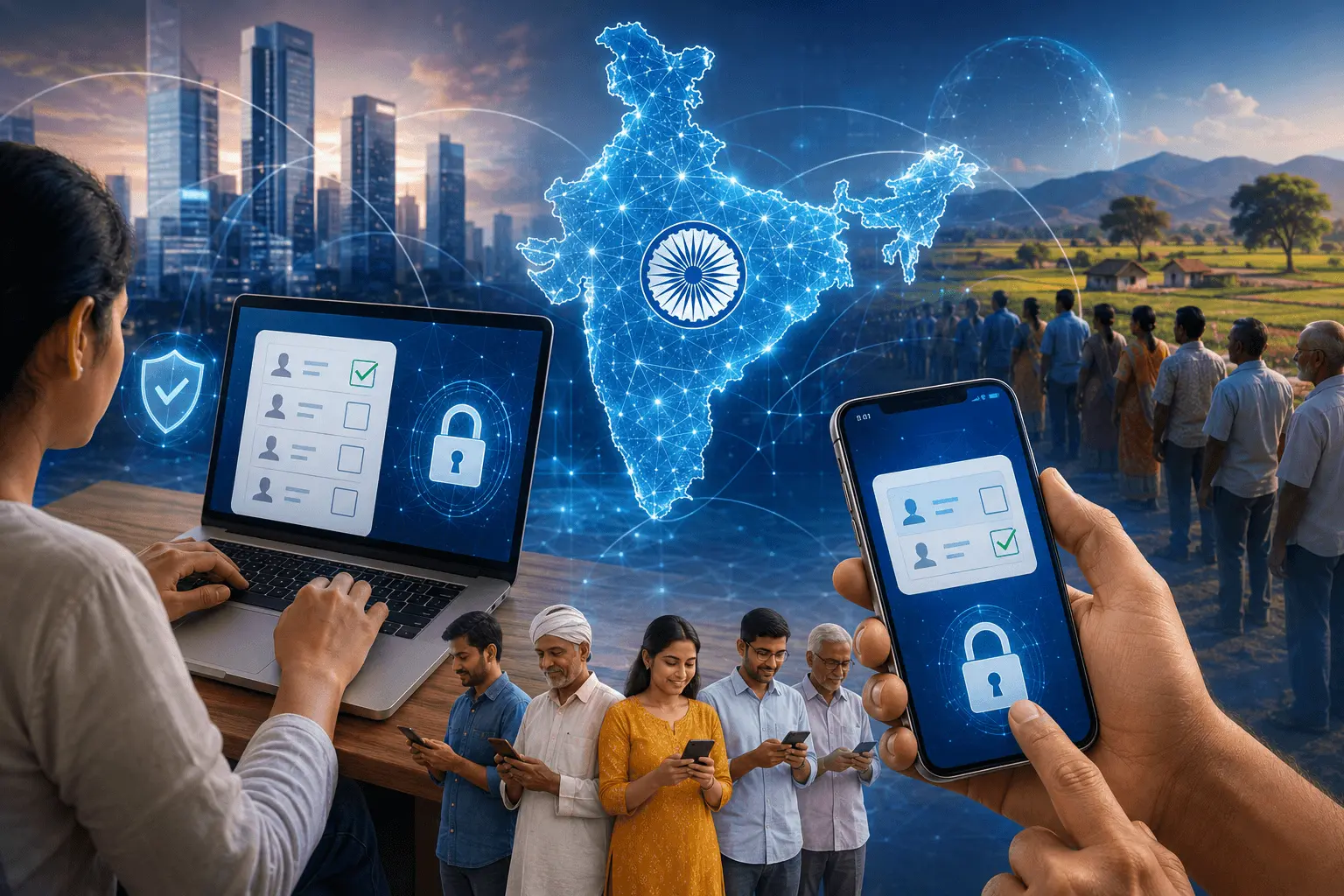
How Online Voting Could Improve Voter Participation

One of the potential advantages of secure remote voting is improved accessibility.

Eligible voters who are away from their registered location may find it difficult to participate through conventional polling arrangements.

The objective would not simply be to make voting faster, but to make democratic participation more accessible while maintaining voter authentication, ballot secrecy, election integrity, and public confidence.

Depending on the legal framework, remote voting could potentially make participation easier for groups such as:

Migrant workers
Students
Professionals working away from home
Armed forces personnel
NRIs
Senior citizens
Persons with mobility challenges
Citizens travelling during election periods

Faster and More Efficient Election Administration

Digital voting can automate several parts of the election workflow.

Instead of manually distributing paper ballots, collecting ballots, transporting voting materials, and manually counting votes, an online election system can digitally manage voter authentication, ballot presentation, vote recording, and result computation.

This can reduce administrative work and provide faster access to election results.

However, for government elections, automation must be accompanied by appropriate safeguards, independent testing, legal authorization, audit mechanisms, accessibility measures, and transparent governance.

Structured Customer Feedback and Data Analysis

Security is one of the most important considerations in government elections.

Technologies such as multi-factor authentication, identity verification, encryption, audit trails, access controls, and secure infrastructure can form part of a comprehensive security architecture.

Right2Vote has developed online voting technology with configurable authentication and election-security features for organizational elections and voting requirements.

Any government-grade online voting system would need to establish that:

The voter is eligible to vote.
The correct voter is accessing the system.
Each eligible voter can vote according to the applicable rules.
The secrecy of the ballot is protected.
Votes cannot be altered after submission.
The election can be independently audited.
Results are accurately calculated.
The system remains resilient against cyber threats.

Online Voting and the Future of Elections

Several countries have experimented with or implemented internet voting for specific government elections. Estonia, for example, introduced internet voting for national elections in 2005.

The international experience demonstrates that online voting is technically possible, but government election systems require careful consideration of cybersecurity, voter authentication, ballot secrecy, transparency, accessibility, coercion risks, auditability, and public trust.

India's scale makes the question particularly significant. With hundreds of millions of eligible voters and elections conducted across diverse geographical regions, secure digital voting could potentially offer significant benefits if the necessary legal, technological, and institutional safeguards are established.

Right2Vote-Certified-eVoting-platform

Right2Vote and Government Election Technology

Right2Vote was founded with the vision of using secure digital technology to make voting more accessible and efficient. The platform provides customizable online election and polling technology with features such as OTP authentication, secret ballot, audit trails, voter receipts, geo-tagging, geo-fencing, IP restrictions, voter selfie, personalized invitations, reminders, and configurable voting methods.

Right2Vote has also been used for elections and voting requirements involving government undertakings, employee associations, trusts, welfare organizations, and other institutions.

Ready to Go Digital?

Join thousands of organizations that trust Right2Vote to conduct their elections securely and transparently.

FAQS

Frequently Asked Questions

What are the main types of government elections in India?

The major direct elections include Lok Sabha elections, State Legislative Assembly elections, and local body elections such as municipal and panchayat elections. India also conducts indirect elections such as Presidential, Vice Presidential, Rajya Sabha, Legislative Council, and other constituency-based elections.

Can government elections be conducted online?

Online government voting depends on the applicable law, election rules, and authorization of the relevant election authority. While internet voting technology exists and is used in some jurisdictions, statutory elections require formal approval, testing, security safeguards, and regulatory compliance.

What is online voting for government elections?

Online voting, or internet voting, allows eligible voters to cast their ballots electronically through an authorized digital voting system rather than physically visiting a polling station.

Can online voting increase voter turnout?

Online voting may reduce geographical and logistical barriers for eligible voters who cannot easily reach a polling location. However, actual turnout depends on voter eligibility, election rules, accessibility, awareness, and the design and implementation of the voting system.

Can NRIs vote through online voting?

Whether an NRI can vote online depends on the applicable election law and arrangements authorized by the relevant election authority. An online voting platform by itself does not change statutory voting eligibility or voting rights.

How can online voting protect voter privacy?

A secure online voting system can use mechanisms such as voter authentication, encryption, access controls, secret-ballot architecture, audit mechanisms, and separation of voter identity from ballot choice where required. The exact architecture must be designed according to the election's legal and security requirements.

Can online voting support preferential or weighted voting?

Yes, digital election platforms can be designed to support different voting methods, including preferential voting and weighted voting, where those methods are legally applicable and supported by the election configuration.

What are the benefits of online voting for large elections?

Potential benefits include remote accessibility, reduced physical infrastructure, faster vote counting, automated result calculation, reduced administrative workload, and improved convenience for eligible voters. Government deployment would also require extensive security, legal, and operational safeguards.

Is online voting secure enough for government elections?

Security depends on the complete system, not simply the voting interface. Government-grade online voting requires strong authentication, cybersecurity, ballot secrecy, encryption, auditability, independent testing, operational controls, legal authorization, and mechanisms to maintain public trust.

Can Right2Vote conduct government elections?

Right2Vote provides online voting technology for eligible organizations, institutions, associations, trusts, and other election requirements. The use of any online voting system for a statutory government election would require approval and authorization from the appropriate government or election authority and compliance with all applicable laws and regulations.


AJAX Loader
Contact us