Election Process: Step-by-Step Guide to How Elections Actually Work
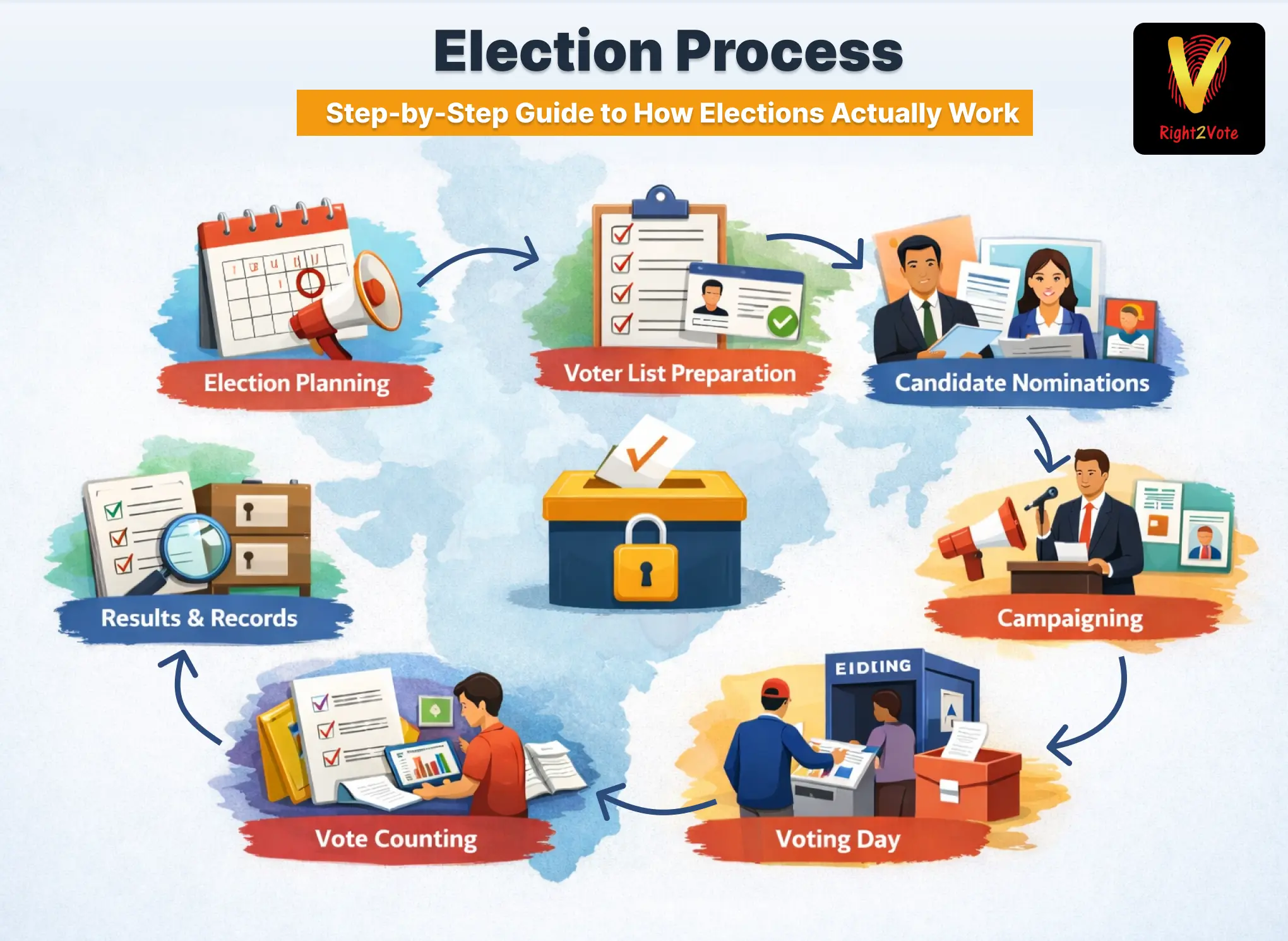

Whenever people hear the word/term “Election”, they often think of standing in a queue, pressing a button on a machine, and waiting for results. But the election process is much more than just voting day.
It is a carefully planned system designed to ensure fairness, transparency, participation, and trust. Whether it is a national election, a housing society election, an association/club election, an union election, a medical association or a corporate board election, the election process follows a structured path that makes the outcome legitimate and acceptable to everyone.
In this guide, we explain the complete election process in simple terms from start to finish.
What is the Election Process?
The election process is a series of steps that allows voters to choose their representatives or decision-makers in a fair, transparent and well-organised manner. It is not limited to voting day but begins much earlier with planning and preparation. From creating an accurate voter list to managing nominations, campaigning, voting, counting and declaring results, every stage plays a vital role. Proper documentation and audit trails further strengthen trust and legal validity. When each step is carefully managed, the election becomes smooth, dispute-free and more likely to be accepted.
- Planning the election in advance
- Preparing and verifying the voter list
- Filing and approving candidate nominations
- Campaigning and voter communication
- Conducting secure and fair voting
- Accurate counting of votes
- Transparent declaration of results
- Maintaining records and audit trails
Each step is important. Skipping or mishandling even one step can lead to disputes, mistrust, and legal issues.
Step 1: Election Planning and Announcement
The election process always begins with a clear and formal announcement that sets the foundation for everything that follows. This stage defines the purpose of the election, the roles to be filled and the rules everyone must follow. When timelines, eligibility criteria and responsibilities are communicated early, it removes confusion for both voters and candidates. Proper planning ensures transparency, accountability, and smooth coordination, helping all participants understand what to expect from the election from the very beginning.
- The election date is officially declared
- Positions or roles to be elected are defined
- Eligibility rules for voters and candidates are shared
- Timeline for nominations and voting is announced
- Election officer or authority is appointed
Step 2: Preparing the Voter List
Preparing the voter list is one of the most sensitive and important parts of the election process. A small mistake here can create disputes later. The voter list must be accurate, updated, and verified to ensure that only eligible members can vote. Duplicate entries, missing names, or outdated records can lead to confusion on voting day. Using digital verification tools and proper record checks helps create a reliable voter list that builds trust in the overall election process.
- Voter data is collected and reviewed carefully
- Duplicate entries are identified and removed
- Member details are updated and verified
- Only eligible voters are included
- The final voter list is published for transparency
Step 3: Nomination of Candidates
During this step, eligible members who wish to contest the election submit their nominations within the specified timeline. This stage ensures that only qualified and eligible candidates participate in the election. Proper document submission and verification prevent disputes later. Once nominations are reviewed, the approved list of candidates is published for voters to see. Transparency in this step is important because it assures everyone that the election is being conducted fairly and according to the defined rules.
- Candidates submit nomination forms and documents
- Eligibility of each candidate is verified
- Nominations are accepted or rejected as per rules
- The final list of approved candidates is prepared
- The candidate list is shared publicly with voters
Step 4: Campaigning and Communication
After the final candidate list is published, candidates begin communicating with voters to present their ideas, plans, and intentions. This stage allows voters to understand who they are voting for and why. Communication can happen through meetings, notices, messages, or discussions within the organization or community. The aim is not just promotion but informed decision-making. A healthy campaigning phase encourages participation, awareness, and engagement among voters before the actual voting day.
- Candidates share their agenda and vision
- Meetings and discussions are conducted
- Notices, emails, or messages are circulated
- Voters interact and ask questions
- Awareness is created for informed voting decisions
Step 5: Voting Day
Voting day is the most visible and anticipated stage of the election process, where voters actively participate in choosing their representatives. Traditionally, this takes place at physical polling booths managed by election officials. Voters mark their presence in manual registers, verify their identity, and cast their vote using paper ballots or EVM machines. This physical setup creates familiarity and trust among voters. The presence of officials, polling stations, and structured procedures ensures that the process feels legitimate, organized, and accessible to everyone involved in the election.
- Physical polling booths are arranged
- Election officials manage the process
- Voters sign manual registers
- Paper ballots or EVM machines are used
- Structured environment builds voter trust
Digital advancements have introduced new ways to conduct voting without changing the core principles of the election process. With booth-based eVoting, voters still visit a polling station but cast their vote through a secure digital system. In some cases, secure online voting or device-based voting is also permitted, allowing participation from remote locations. These methods reduce waiting time, remove manual errors, and make the process faster while maintaining the discipline and control of traditional voting environments.
- Booth-based eVoting at polling locations
- Secure online voting options where allowed
- Voting through mobile or computer devices
- Reduced queues and faster process
- Elimination of manual recording errors
Despite the method used, the fundamental principles of voting remain the same. Every voter must be properly verified before casting a vote to prevent duplication or impersonation. The secrecy of the ballot is strictly maintained so that voters can make independent choices without any external pressure. Most importantly, the rule of “one person, one vote” is enforced throughout the system. These core elements ensure fairness, equality, and integrity in the election process, regardless of whether voting is traditional or digitally supported.
- Proper voter verification before voting
- Secrecy of the ballot is maintained
- One person is allowed to cast only one vote
- Fairness and equality are preserved
- Integrity of the election process is ensured
Step 6: Vote Counting and Result Declaration
After voting concludes, the next crucial phase in the election process is vote counting and result declaration. In traditional manual systems, counting can take several hours or even days and may be prone to human errors or disputes. Digital election systems simplify this stage through instant counting and accurate tabulation, ensuring speed and reliability. Once counting is completed, results are formally declared with complete transparency. This includes total votes cast, votes secured by each candidate, and the final winners. Proper documentation of counting and results strengthens trust, legitimacy, and acceptance of the election outcome among all participants.
- Votes are counted after polling ends
- Manual counting may be slow and error-prone
- Digital systems enable instant and accurate counting
- Total votes cast are recorded
- Votes received by each candidate are displayed
- Winning candidates are officially declared
- Proper records are maintained for transparency and legitimacy
Step 7: Audit Trail and Record Keeping
A reliable election process continues even after results are declared through proper audit trails and record keeping. All election data must be securely stored for future reference, dispute resolution, legal compliance, and transparency. Digital systems help create tamper-proof records that can be easily retrieved when required, ensuring the integrity of the election and building long-term trust among voters and stakeholders.
Challenges in Traditional Election Processes
One of the biggest challenges we observe is that many problems voters experience are not due to the intention of the election, but due to limitations in how the process is managed. Long queues and delays often frustrate voters and reduce participation. Errors in the voter list, such as missing names or incorrect details, create confusion and arguments on voting day. The risk of duplicate voting or impersonation raises doubts about fairness. Manual counting of votes can lead to mistakes, objections, and recount demands. When voters cannot clearly see how the process is handled, it creates a feeling of a lack of transparency. All these issues, when combined, often result in disputes after results are declared, even if the election was conducted with honest intentions. These challenges highlight why improving the election process and adopting better systems is necessary to build voter trust and ensure smooth, dispute-free elections for everyone involved.
These problems occur not because elections are flawed, but because the process is not efficiently managed.
How Technology Improves the Election Process
Technology does not change the fundamental rules of elections; it strengthens how the election process is carried out. With platforms like Right2Vote, elections become faster to conduct because many manual tasks are automated and streamlined. Managing voting and counting becomes easier for election officers and organizers. Voters gain better visibility into the process, which improves transparency and trust. Accurate digital counting removes the risk of human error, while secure authentication ensures that only eligible voters can cast their vote. As Right2Vote has been providing eVoting services in India for more than 10 years and has conducted over 21,000 successful elections across diverse sectors, this trust is backed by strong credentials. Right2Vote holds the CQW mark, STQC certification, MCA approval, ISO 27001 certification, and validations from CERT-In empanelled bodies. Unlike platforms that avoid repeated audits, Right2Vote has been certified by STQC three times in a row, reflecting its strict commitment to security.
These advantages are especially valuable for housing society elections, where managing large voter groups manually can be difficult and time-consuming. Associations and clubs benefit from smoother coordination and higher participation. Union elections require fairness and clarity, which digital systems support effectively. In corporate and board elections, accuracy and documentation are critical for compliance and governance. Institutional elections also become more organized and dispute-free. By improving efficiency, security, and transparency, technology helps these organizations conduct elections confidently while maintaining the integrity of the entire election process.
Conclusion
The election process goes far beyond voting day. It involves careful planning, proper verification, transparency, accuracy, and trust at every stage. From preparing the voter list to declaring results, each step contributes to the credibility of the outcome. With secure digital platforms like Right2Vote, organizations can conduct elections smoothly and reliably while preserving traditional voting principles. A well-managed election process builds confidence among voters, and confident decisions ultimately create stronger, more united communities and organizations.
 West Bengal Election 2026: More Than an Election, A Turning Point for Bengal
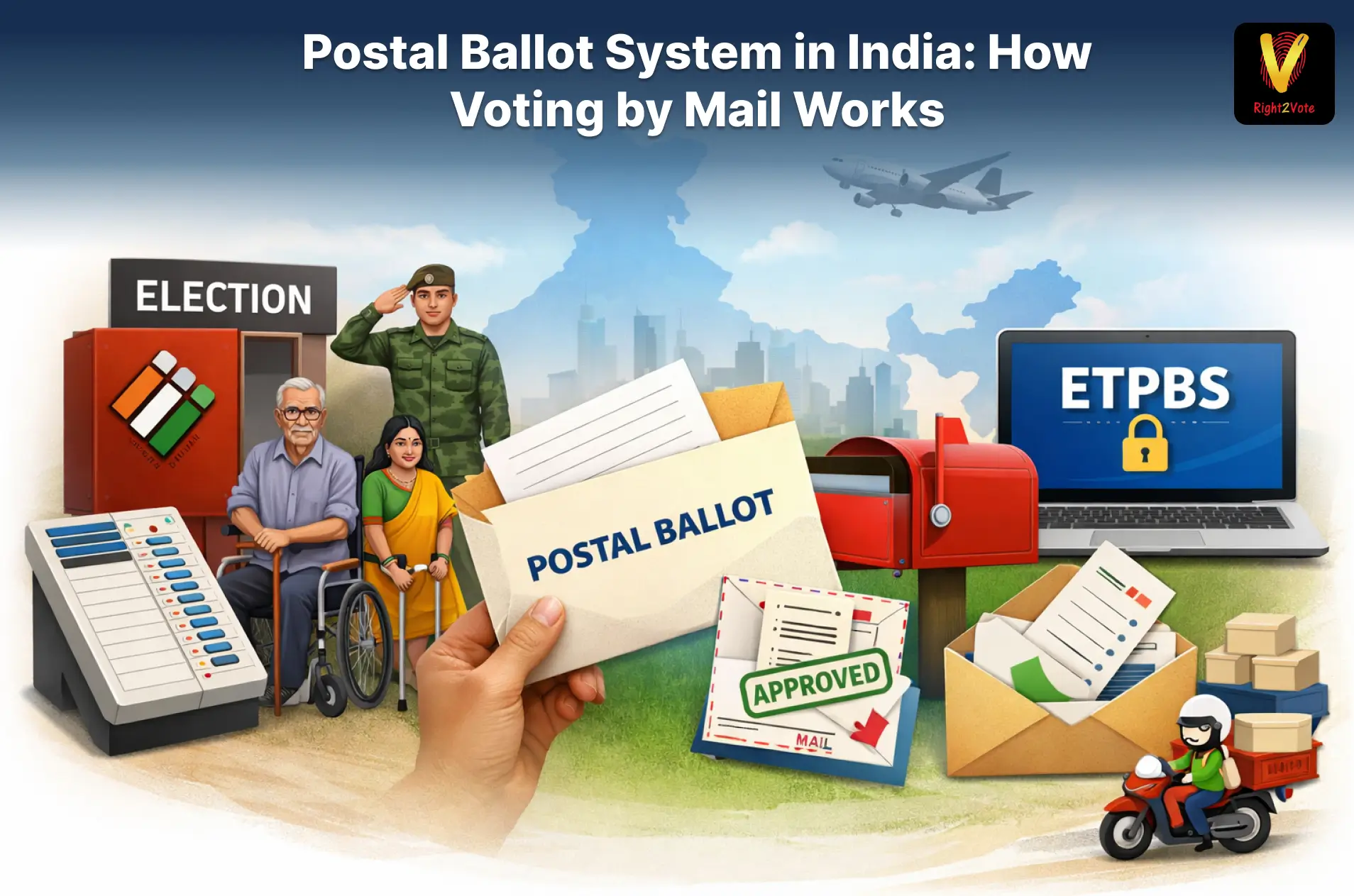 Postal Ballot System in India: How Online Voting by Mail Works
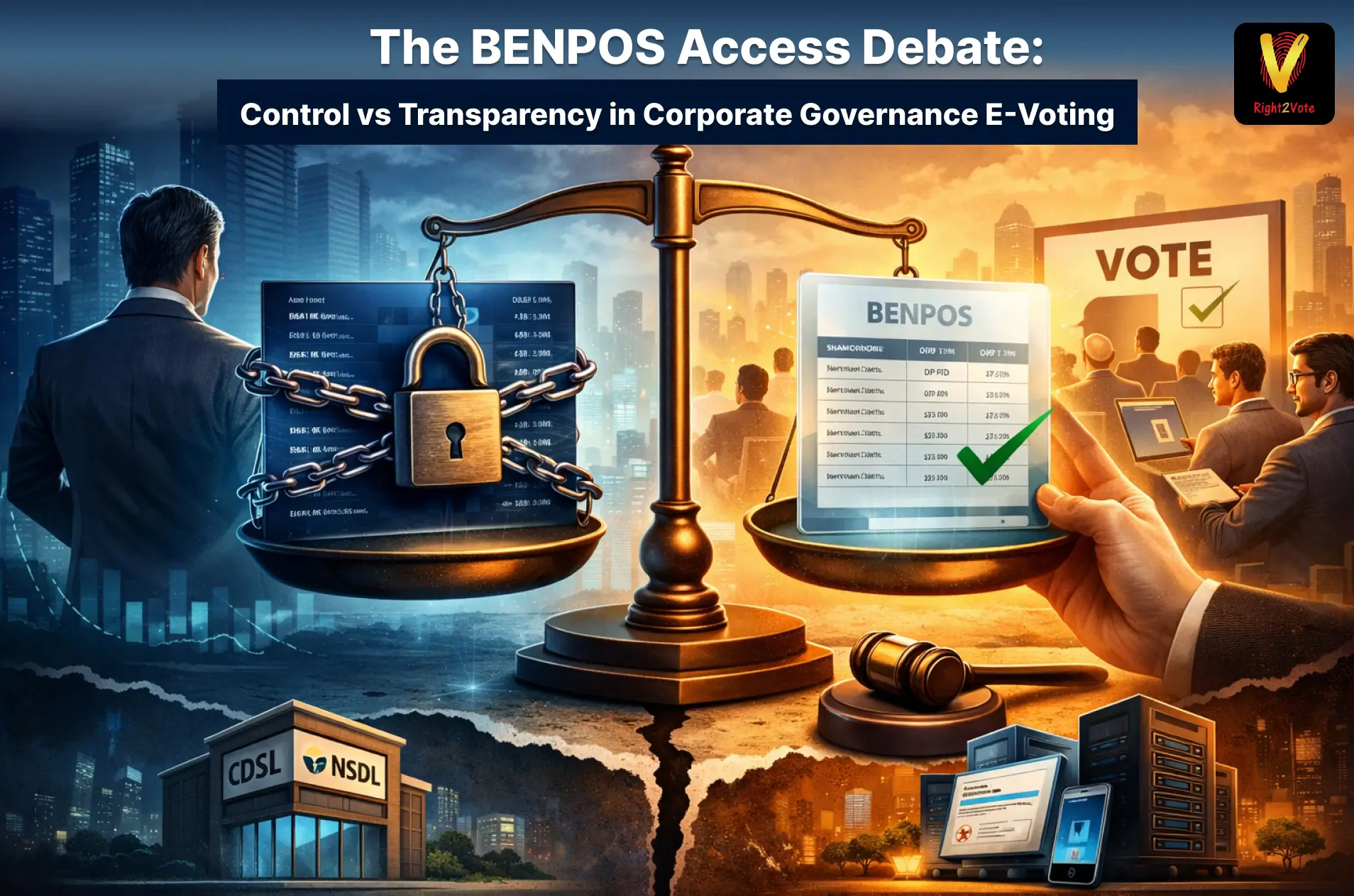 The BENPOS Access Debate: Control vs Transparency in Corporate Governance E-Voting